
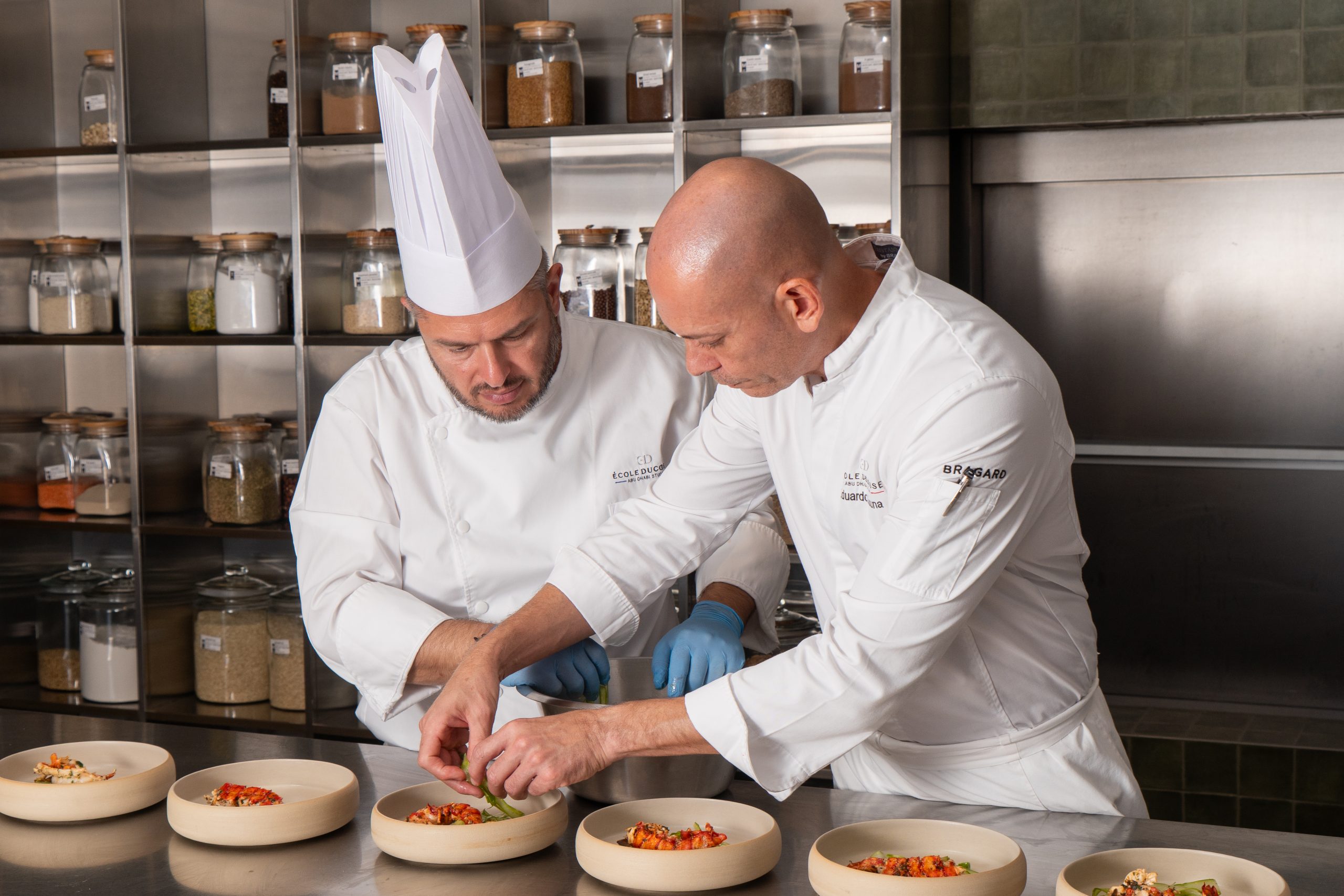
A love of food may begin at home, but building a successful career in the culinary industry requires much more than enthusiasm. Professional chefs need technical knowledge, practical experience, discipline, creativity, and the ability to perform under pressure. This is where professionally designed Culinary Courses can make a meaningful difference.
Whether you dream of working in a luxury hotel, opening your own restaurant, becoming a pastry chef, or joining an international hospitality brand, professional culinary education can provide the skills and confidence needed to move forward.
At Ecole Ducasse Abu Dhabi Studio, students are introduced to the real world of professional cooking through practical training, structured lessons, and industry-focused learning. As a Leading Culinary Arts School in Abu Dhabi, the institution aims to help aspiring chefs develop strong foundations while preparing for the expectations of modern kitchens.
This guide explores what professional culinary arts programs include, who should consider joining them, and how the right training can support long-term career growth.
What Are Professional Culinary Arts Programs?
Professional culinary arts programs are structured training courses designed to teach the techniques, knowledge, and working habits required in commercial kitchens. Unlike casual cooking classes, these programs go beyond individual recipes.
Students learn why ingredients behave in certain ways, how to use professional equipment, how to plan kitchen operations, and how to maintain quality during busy service periods. They are also introduced to food safety, presentation, costing, teamwork, and kitchen discipline.
Depending on the program, training may cover:
- Basic and advanced cooking techniques
- Knife handling and kitchen equipment
- International and regional cuisines
- Baking and pastry preparation
- Food hygiene and sanitation
- Menu planning and recipe development
- Kitchen organization
- Ingredient selection and storage
- Food presentation and plating
- Cost control and portion management
- Restaurant and hospitality operations
- Professional communication and teamwork
The goal is not simply to help students cook better. It is to prepare them to work professionally, consistently, and safely.
Why Culinary Courses Matter for Aspiring Chefs
Some talented cooks begin their journey by learning from family members, online videos, or personal experimentation. These experiences can be valuable, but professional kitchens operate very differently from home kitchens.
In a commercial environment, chefs must prepare multiple dishes at the same time, follow exact standards, manage ingredients carefully, communicate with a team, and complete tasks within strict deadlines. A dish must not only taste good once; it must be prepared with the same quality repeatedly.
Well-designed Culinary Courses help students develop this consistency. They provide a clear learning path, allowing students to build one skill before moving to the next.
For example, students may begin with kitchen safety and basic knife techniques before progressing to stocks, sauces, meat preparation, pastry work, and complete menu production. This structured approach can reduce confusion and strengthen confidence.
Students also receive guidance from experienced instructors who can identify mistakes that may be difficult to notice when learning alone. Small corrections in temperature control, seasoning, cutting technique, or timing can significantly improve the final result.
What You Can Learn in Culinary Courses
A professional culinary program usually combines theoretical knowledge with practical kitchen sessions. Both are important because successful chefs need to understand what they are doing as well as how to do it.
Fundamental Cooking Techniques
Every strong culinary career begins with the basics. Students learn essential methods such as roasting, grilling, frying, steaming, poaching, braising, sautéing, and baking.
Understanding these methods allows students to work with different ingredients and adapt recipes more confidently. Instead of relying only on memorized instructions, they begin to understand how heat, time, moisture, and preparation affect food.
Knife Skills
Knife skills are among the most important abilities in a professional kitchen. Proper technique improves speed, accuracy, presentation, and safety.
Students may practise different cuts for vegetables, fruits, herbs, meat, poultry, and fish. They also learn how to hold, clean, sharpen, and store knives correctly.
Good knife skills may appear simple, but they influence almost every stage of food preparation.
Stocks, Soups, and Sauces
Stocks and sauces form the foundation of many professional dishes. Students learn how to extract flavour from ingredients, achieve the correct consistency, and balance seasoning.
These lessons encourage patience and attention to detail. They also help students understand how professional chefs create depth of flavour without depending entirely on ready-made products.
Meat, Poultry, and Seafood Preparation
Professional training often includes the correct handling and preparation of meat, poultry, and seafood. Students may learn trimming, portioning, marinating, deboning, cooking, and presentation techniques.
They are also taught the importance of storage temperatures, cross-contamination prevention, and safe food handling.
Baking and Pastry
Baking requires precision. Small changes in measurement, mixing, temperature, or timing can affect the final product.
Culinary students may be introduced to breads, cakes, pastries, biscuits, creams, custards, and plated desserts. These lessons help students develop accuracy while giving them opportunities to explore creativity.
International Cuisine
Abu Dhabi’s hospitality sector serves residents and visitors from many cultural backgrounds. As a result, chefs often benefit from understanding a variety of cuisines.
Professional Cooking Courses in Abu Dhabi may introduce students to culinary traditions from the Middle East, Asia, Europe, and other regions. This exposure can help future chefs become more adaptable and employable.
Students learn that international cuisine is not simply about copying recipes. It involves understanding ingredients, cultural preferences, preparation methods, and authentic flavour combinations.
Food Presentation and Plating
People often experience food visually before tasting it. Presentation therefore plays an important role in restaurants, hotels, catering businesses, and social media marketing.
Students learn how to arrange food thoughtfully, use colour and texture, select appropriate tableware, and avoid overcrowding a plate. The purpose is not to make every dish overly complicated. It is to present food in a way that looks clean, balanced, and appealing.
Food Safety and Hygiene
Food safety is essential in every professional kitchen. A chef may be creative and technically skilled, but poor hygiene practices can place customers and businesses at risk.
Students are trained in personal hygiene, safe storage, temperature control, allergen awareness, cleaning procedures, and contamination prevention.
These habits must become part of a chef’s daily routine rather than something followed only during inspections.
Who Should Enrol in Professional Culinary Programs?
Culinary education is suitable for people from a wide range of backgrounds. Some students join immediately after completing school, while others choose culinary training after working in a different field.
Professional programs may be suitable for:
- School graduates exploring career options
- Home cooks who want professional skills
- Hospitality employees seeking career advancement
- Restaurant workers without formal training
- Entrepreneurs planning a food business
- Aspiring bakers and pastry chefs
- International students interested in hospitality
- Career changers looking for practical education
- Food content creators seeking stronger technical knowledge
You do not necessarily need years of experience before enrolling. A serious attitude, willingness to learn, and genuine interest in food can provide a strong starting point.
Why Study at a Leading Culinary Arts School in Abu Dhabi?
The school you choose can shape both your learning experience and your professional confidence. A Leading Culinary Arts School in Abu Dhabi should offer more than attractive classrooms or a long list of recipes.
Students should look for a learning environment that reflects the standards of the hospitality industry. Training should be practical, organized, and relevant to the type of work graduates may encounter.
At Ecole Ducasse Abu Dhabi Studio, the focus is on helping students connect culinary knowledge with real kitchen practice. Lessons are designed to develop technical ability, professional discipline, and an understanding of industry expectations.
Key qualities to consider when selecting a culinary school include:
Experienced Culinary Instructors
Qualified instructors can provide insight that goes beyond textbooks. They understand common kitchen challenges and can demonstrate how professionals manage time, ingredients, equipment, and pressure.
A good instructor also knows how to explain techniques clearly and provide constructive feedback.
Practical Kitchen Training
Culinary arts cannot be mastered through lectures alone. Students need regular opportunities to prepare food, use equipment, correct mistakes, and work within realistic time limits.
Practical training allows students to develop muscle memory and confidence. The more students practise essential techniques, the more naturally they can perform them.
Industry-Relevant Curriculum
The food and hospitality industry continues to evolve. Modern culinary programs should consider changing customer expectations, dietary preferences, sustainability, food presentation, and commercial kitchen practices.
A relevant curriculum helps students prepare for current workplaces rather than outdated kitchen environments.
Professional Learning Environment
Students should become familiar with punctuality, cleanliness, teamwork, personal presentation, and responsibility. These qualities are highly valued by employers and often influence career progression.
A professional school environment helps students begin developing these habits before entering full-time employment.
Career-Focused Guidance
Culinary education should help students understand possible career paths. Some may want to work in hot kitchens, while others may prefer pastry, catering, food production, restaurant management, or entrepreneurship.
Career guidance can help students identify their strengths and make better decisions about their future.
Career Opportunities After Completing Culinary Courses
Completing professional Culinary Courses can open the door to several career directions. The exact opportunities available will depend on the student’s qualification, experience, specialization, and practical ability.
Potential roles include:
- Commis chef
- Chef de partie
- Pastry assistant
- Baker
- Catering chef
- Restaurant cook
- Hotel kitchen professional
- Food production assistant
- Private chef
- Kitchen supervisor
- Recipe developer
- Food stylist
- Culinary trainer
- Restaurant entrepreneur
- Catering business owner
Many graduates begin in junior positions and develop through experience. The culinary industry often rewards people who are dependable, organized, willing to learn, and able to maintain quality.
Formal education does not replace hard work, but it can provide a stronger starting point. It may also help students understand professional terminology, kitchen structure, and safety requirements before beginning their first role.
Culinary Training for Future Food Entrepreneurs
Not every culinary student plans to work for a hotel or restaurant. Some want to launch cafés, bakeries, catering businesses, cloud kitchens, dessert brands, or home-based food services.
For these students, culinary education can reduce costly trial and error.
A food entrepreneur needs to understand more than recipes. Products must be consistent, safe, correctly priced, and suitable for production in larger quantities. Business owners must also consider ingredient costs, waste, portion sizes, menu planning, storage, packaging, and customer expectations.
Professional Cooking Courses in Abu Dhabi can help entrepreneurs build reliable food preparation systems. They may also help students recognise whether an idea is commercially practical before making a major investment.
For example, a dish that is easy to prepare at home may be difficult to produce quickly during peak business hours. Training helps future entrepreneurs consider preparation time, equipment needs, staffing, and profitability.
The Importance of Practical Experience
Culinary arts are learned through repetition. Reading about a technique can be useful, but students must perform it themselves to understand the details.
A sauce may separate. Bread may fail to rise. Meat may become dry. A plate may look unbalanced. These mistakes are part of the learning process.
In a supervised training environment, students can understand why something went wrong and how to improve it. They learn to adjust seasoning, temperature, timing, texture, and presentation.
This practical problem-solving ability is essential because professional kitchens are not always predictable. Ingredients may vary, equipment may behave differently, and customer orders may arrive at the same time.
A capable chef does not panic when a problem appears. The chef evaluates the situation and responds quickly.
How to Choose the Right Cooking Courses in Abu Dhabi
With different training options available, students should compare programs carefully before enrolling.
Start by considering your goal. Are you looking for a complete professional qualification, a short skills program, a pastry specialization, or training for a food business?
You should also review:
- Course duration
- Entry requirements
- Practical training hours
- Topics included in the curriculum
- Instructor experience
- Kitchen facilities
- Class size
- Assessment methods
- Certification
- Internship or career support
- Tuition fees and payment options
- Schedule flexibility
Avoid selecting a course based only on price. A low fee may appear attractive, but students should consider the quality and amount of practical instruction they will receive.
Similarly, the most expensive option is not automatically the best. The right course should provide clear value, relevant training, and a learning structure suited to your goals.
Before making a decision, speak with the admissions team at Ecole Ducasse Abu Dhabi Studio and ask specific questions about the program. A professional institution should be able to explain what students will learn, how they will be assessed, and what level of commitment is expected.
Skills That Support Long-Term Culinary Success
Technical cooking ability is essential, but successful chefs also need strong professional qualities.
Time Management
Kitchen work is highly time-sensitive. Chefs must plan tasks so that different components of a dish are ready together.
Teamwork
Professional kitchens depend on communication and coordination. Even a talented chef can struggle without the ability to work respectfully with others.
Attention to Detail
Small details affect flavour, appearance, safety, and customer satisfaction. Accurate measurements, clean presentation, and correct storage all matter.
Adaptability
Menus, customer requests, ingredients, and workplace demands can change. Chefs must be willing to learn and adjust.
Physical and Mental Discipline
Culinary work can involve long periods of standing, repeated tasks, heat, and pressure. Students should develop healthy working habits and realistic expectations.
Creativity
Creativity helps chefs develop new ideas, but it is most effective when supported by technical knowledge. Students who understand the rules are better prepared to experiment successfully.
Begin Your Culinary Journey with Ecole Ducasse Abu Dhabi Studio
A professional culinary career does not begin with a senior title. It begins with learning the basics, practising consistently, accepting feedback, and improving one service at a time.
The right education can help transform raw interest into practical ability. Through structured Culinary Courses, students can build technical skills, understand professional kitchen standards, and explore the many career paths available in food and hospitality.
As a Leading Culinary Arts School in Abu Dhabi, Ecole Ducasse Abu Dhabi Studio is committed to supporting aspiring chefs, food entrepreneurs, hospitality professionals, and passionate home cooks who want to take their abilities further.
Students can explore professionally designed Cooking Courses in Abu Dhabi that combine culinary knowledge with hands-on learning. Whether your goal is to work in a restaurant, join a hotel kitchen, specialize in pastry, or develop your own food business, the first step is gaining the right foundation.
Contact Ecole Ducasse Abu Dhabi Studio today to learn more about available programs, admission requirements, course schedules, and training options. Your passion for food can become more than a personal interest. With professional guidance, consistent practice, and the right culinary education, it can become a rewarding future.